Showing posts with label mama. Show all posts

27 March 2013

5 things that prove I love Garrison Keillor


My love of Garrison Keillor has finally paid off, in the way only an English major raised on a steady intake of A Prairie Home Companion would consider a pay off:

As a promotion for his new CD, My Little Town, he's doing a "submit your favorite story about your little town" contest, and he picked this thing I wrote to publish on his site. {I'll tell you more about the thing in a minute.}


  Note several things:

  • I keep saying "he," as if Garrison is there coding the submission form. {You can see it for yourself and admire his handiwork. Such a renaissance man, he is.}
  • Or as if he's staying up past his bedtime reading submissions from people around the country who are trying to make their town sound like Lake Wobegon.
  • I mean, I realize that Garrison probably didn't actually read my poem, but I'm going to pretend. After years of listening to him him spin tales about a town that seemed so familiar and home-like to me, I'm going to pretend that he read about my little town—out loud, obviously, in that deep, nostalgia-creating voice of his—and thought to himself, 'Well, oh my, I'd like to go to this town this Kamiah girl is from. Maybe the next time I'm doing my show at Ravinia, I'll pop out to Glen Ellyn and visit her. We'd get along like gangbusters.' I just know he'd use the word gangbusters.

Yes, I'm going to pretend that my poem has now become one of Garrison Keillor's favorites.

In my mind, he's going to read it on that Writer's Almanac podcast of his someday {which I just wrote about yesterday. Garrison and I are already displaying best-friends-who-think-alike behavior}.

Please don't take my fantasy away from me, but give an NPR nerd her moment in the pale Minnesota sun that's shining down on Lake Wobegon right now.


A Little More about This Thing I Wrote

All you had to do was tell a story about your hometown, and I, in a rare moment of turning my back on Iowa, submitted a poem about Glen Ellyn that I wrote about two years ago. The carnival comes to town every year, and there is nothing like the smell of corndogs to put me in a poetry mood. {That's just the kind of statement Garrison would relate to.}

You can read the poem here on my blog.

Or, if you'd like to see it in its Prairie Home Companion glory, you can see it here. {You, sadly, have to scroll down to the bottom. I need to call Garry and get him to put my poem on the top.}

So, there you have it: Garrison Keillor is, I'm sure, going to visit Glen Ellyn soon in order to meet me. If he comes during the carnival, I would most definitely buy him a funnel cake.

The following list may help really convince him that he should come.


5 Things that Prove I Love Garrison Keillor

  1. I own this t-shirt:

    It is, for those of you who don't know {I scoff at you}, the shirt for the Professional Organization of English Majors, this group that Garrison made up and sometimes does sketches about. If it were real, you know I'd belong.

    If you're an English major and you'd like a shirt, too, you should order one from Garrison.
  2. I once met him—at Tanglewood. My family, we're kind of Garrison groupies, and we went out to western Massachusetts to see him do his show live one summer. Afterwards, we stood in line to meet him. When he heard my name, he said, "Kamiah. Kamiah. That sounds like a name that belongs in a limerick," which is not something I've ever had said to me before, nor is it the conversation I envisioned having with him, but that is all right.
  3. When I was in middle school, someone asked what I liked to listen to on the radio. I said, "A Prairie Home Companion," before I realized that I should've said, "Really awesome music that kids my age would know."

    That experience mirrors the time in elementary school when we were asked our favorite band, and I said, "Peter, Paul, and Mary."
  4. My parents go on the Prairie Home Companion cruises almost every summer. I realize this doesn't really prove why I love Garrison, but it clearly shows that it's in the blood.
  5. Someone once told me, "Your stories sound like something Garrison Keillor would tell. You're like a 30something girl version of him." I had just recently met the person, and I wanted to hug them. That is the 3rd best compliment I've ever received.


01 October 2012

a second spring


My mother sent me an email today to tell me that she'd thought I'd like this quote:
Autumn is a second spring when every leaf is a flower.
Albert Camus said that, the great French existentialist.

How beautiful and how relatable, which isn't something I often associate with existentialism.

I more associate it with the glib phrase: my existential crisis, that panic that often hits in the mid-twenties when you're trying to figure out who you are and pay your bills on time and make new friends in an unknown place and realize that your paycheck is the only gold star you're going to get.

Who am I? What am I doing here? How did I become someone who works in a cubicle?

The questions come pounding in, and you freak out.

That is the existential crisis, and you get through it—partly by doing things like noticing that every day has something good in it, something to be thankful for, something worth paying attention to.

Right now, it's the fall leaves. Every one of them is a flower, and I plan on noticing them this year, don't you?


17 April 2012

happy tax day


I am the daughter of two accountants, and so I believe that Tax Day should be its own capitalized sort of holiday.

It would be celebrated with confetti made from tax forms and a very detailed cake that would look like an adding machine. It would be a chocolate cake, of course, and the accountants could feel as gleeful as accountants can feel* as they ate all those numbers.

Perhaps there could be a pinata that looks like a spacey client who can't find all her forms and forgot to sign on the dotted line even though there was a very obvious Post-it Note arrow pointing at the line and screaming: SIGN HERE.

The punch would probably be very, very spiked.

----------

When I was a little girl, I once told my parents, "I hate taxis."

Being a child from a medium-sized town in Iowa with very few taxis, this was not a normal thing for me to say. I could hate the fish that tickled my toes when I swam in the Mississippi or I could hate it when there was a long line at the Dairy Queen—things very much in my experience—but to hate taxis seemed out of place.

They asked a few probing questions, trying to figure out what my little brain was trying to communicate, and they finally pulled it out of me: I hated tax season.

I was still working on my ability to separate words, apparently, and classify the world in recognizable chunks. Every time my parents talked about tax season:
Daddy has to work on Saturday because it's tax season.

We'll go on vacation after tax season.

Here comes tax season!
What I heard was:
Daddy has to work on Saturday because it's taxis.

We'll go on vacation after taxis.

Here comes taxis!
And so I hated taxis.

Further adding to my confusion: I spent many hours at my parents' office, playing with/eating the rubber cement, writing Important Things on a not-needed typewriter, being told not to mess with the files, etc.

And I noticed, in all those hours, that my dad had a little rolly-thing, much like a piece of plywood on wheels, that he used to move stacks of tax returns up to his office, where he would, I assumed, cover them in rubber cement and type up Important Things to put in them.

I watched him wheel the cart and say things like, "I love tax season!" and my childlike logic told me this: That cart has something to do with taxis. WAIT. That cart could be—I really think it is—it has to be a taxi!

I hated that cart and all that it implied.

And yet when it wasn't tax season and that cart wasn't as needed, I was allowed to play on it. My sister would pull me from one end of the office to the other, and in those moments, I loved the cart and taxis.

It was a rough time for me until I figured out that:
  • Taxis are actually cars that you ride in when you're in big cities. You should love taxis, especially when your feet are tired.
  • Careening on a cart is not the most dignified office behavior.
  • Tax season was a necessary evil if I wanted to go on vacation.

----------

Happy Tax Day! I hope you've prepared the confetti and punch for your accountant. They deserve it. They probably also deserve a ride in a taxi.


*I have to put in this asterisked note after even suggesting that accountants are not gleeful people. They get a pretty bad rap as the dull bean counters of the world, which sounds more like a name that should be applied to soybean farmers. I have never seen my parents count beans, but I can vouch—and back it up with many stories—that they do not fit the stereotype of accountants. They are not dull; my mother has a tattoo, for Pete's sake, and my dad once took my very pregnant mother to Canada with plans to hitchhike and backpack in the Canadian Rockies, which, I don't think, was top on my mother's list of things to do while about to give birth. No, they're not dull people at all.


06 October 2011

countdown to anne of green gables


Next Tuesday night, I'm leaving for Prince Edward Island.

Enter squeals of delight about Anne of Green Gables.

Or maybe you're squealing in delight yourself, in which case I hope you're somewhere private and not at work or in a library or on the train. If you are, pull yourself together. Think of Marilla giving you a stern look; that always works.

I have wanted to go to PEI since I was a very little girl. I read Anne of Green Gables for the first time when I was eight or so {I'm looking to my mother for corroboration here}. We were on vacation out West somewhere, and so in the middle of the desert and in the mountains, I spent my days reading about this charmed Canadian island and a girl who used words that were too big for her.

And by "spent my days reading" I clearly mean "spent my days pretending to be the girl who used words too big for her."

I acted out conversations with Diana Barry, aka my/Anne's best friend.

I sat next to a stream and tried to come up with a fairytale-inspired name for it, just like Anne would've done. Dryad's Bubble? Excluding the fact that I just stole that from the book, I thought it was a rather perfect name.

I made plans to memorize "The Lady of Shalot" and potentially act it out if I could talk any of my real friends—not just imaginary Diana Barry—into it.

I thought way more than I should have about puffed sleeves and pinafores. It's hopeless to think about clothes like that when:
  • a1a) it's the late 80s. Shoulder pads are not the same thing as puffed sleeves.
  • b2b) you're in Utah or Colorado and you've been camping for 2 weeks straight, changing clothes only every third day or so. Why bother? was the family motto. Get one set of clothes as dirty as possible; it's not like you're taking a shower every day when you're camping in a place with just pit toilets. Or no toilets at all.
  • c3c) it's 100 degrees in the shade. I managed to focus all my energy on the puffed sleeves and ignore the rest of the clothes requirements that come with wanting to pretend to be Anne of Green Gables, ie, wool stockings and petticoats and collars up to way-too-high and corsets. Basically, I just wanted to wear a pretty dress and go to a dance. Or maybe recite "The Lady of Shalot." And have Gilbert Blythe clap for me.

After I read Anne, I gave the book to my mom to read. We then had a now-famous* conversation:

*I mean famous in the "we tell this story at family functions" kind of famous. Clearly not famous in the Justin Bieber kind of way. OMG, I can't believe I just mentioned Justin Bieber on my blog with Jane Austen in the title. Now there's a mash-up.

Little Mia: Mom, why are you crying?

I should, before going on, point out that I remember this conversation taking place in a field of poppies. That may not be correct, although I do know that on one of our trips, we stopped in a field of poppies on our way back from an attempted space shuttle landing.

No, not like we were landing the space shuttle. Like—it was supposed to land in California, but high winds or something diverted it to Florida or perhaps Texas. We were not there, in Florida or Texas; we were in California, and my mama had thought it would be cool to show her nerdy daughters a space shuttle landing. And it clearly would've been; by that point in the trip, I obviously needed something to pull me back to present-day America, and nothing says America like space, the final frontier.

So I'm pretty sure that we stopped in a field of poppies on that trip, although now that I think about it, poppies have opioid-like properties, don't they? For all I know, I was drugged by the poppies and now have incredibly muddled memories. Or maybe I'm thinking of The Wizard of Oz.

Let's just assume we were, in fact, in a field of poppies having this conversation.

Mama: [holding a Kleenex to her nose] It's because of this book.
Little Mia: That book? The Anne book? That's not a sad book. There's puffed sleeves! And a little girl with a temper, just like me!
Mama: [pulling Kleenex away from her nose, staring at her youngest daughter with something like, "I'm not actually sure you came out of me" on her face] She's an orphan and no one wants her! That's sad, don't you think?
Little Mia: Yeah, I guess. But that's nothing to cry over, is it? It's not like you're an orphan, and besides, she gets to live in Green Gables in a room with a big window that looks out on to a tree, just as if she were sleeping in the tree.

I should also point out that it was my dream to have a room on the second floor of our house. I was on the first floor, and while it was all right, I felt that I belonged up high. After reading Anne, I was sold even more on the idea of having a tree right outside my big window.

Mama: Well, I'm still sad about it.
Little Mia: Do you think the Wicked Witch of the West is flying over us in this field of poppies?

And that, friends, is when my family figured out that I'm not really a "crier." And started to worry a little bit about the state of my emotions.

Next week at this time, I'll be in Anneland, preferably wearing puffed sleeves and making overly-dramatic statements. Heck, even if just one of those things turned out to happen, I'd be thrilled. My money is on the puffed sleeves thing coming true.


25 July 2011

reunited and it feels so good


Over the weekend, I drove home to Iowa listening to the end of The Worst Hard Time, this book about the Dust Bowl that I could talk about for 12 hours straight.

So much learning!

Such a contrast to drive through the elephant's-eye-high cornfields as the book described scorched earth, blizzards that fell as mud from all the dust in the sky, and 36 days in a row when the temperature went above 100. {Note to self: do not complain about heat again. God may smite you with a dust bowl.}

I should move on from the book—before this turns into an ode to dust and that Woody Guthrie song "So Long, It's Been Good to Know You."

{Note to self: write an ode like that.}

I was going home to Iowa to pick up baby pug, who had been staying at my parents' house while I was on vacation in France. This is, of course, a completely fair trade: Iowa for France.

It's fair when one of you is a pug.

I was worried that Miss Daisy might a1a) not remember me, or b2b) be mad at me for leaving her in Iowa while I gallivanted off to the land of pastries and good butter. {I don't know if pugs have discerning enough tastebuds to know good butter, but in my mind, she was going to be mad at me about the butter, not about the abandonment thing.}

I called my mama the other night to check on baby pug. They had just gotten home from vacation—

Yes, they were on vacation, too. You're probably wondering, "Did you leave Miss Daisy to fend for herself? Perhaps by using her little pug legs and jumping up to eat the ears of elephant's-eye-high corn?"

And to that I say, "Now that's just ridiculous. First of all, my parents live in town where there are no cornfields. Second of all, I'm sure their two pugs would help her out and they could build a pug pyramid to get the corn, should they find any stalks in town, which, as mentioned before, is unlikely."

My parents have a pug sitter from the vet come to stay with their puggies when they go on vacation, so I figured that Miss Daisy would be in good hands. Perhaps more capable hands than my hands. I pretty much figured it'd be like a pug spa for Miss Daisy.

So I called my mama to check on baby pug, and she said, "Do you want to talk to her?"

Now, I may be one to think that my pug is going to be mad at me for butter.

And I may talk to her out loud while we're on walks.

And I may try to explain to her why she can't bark at every little noise, using all my powers of logic and expression.

Doing all of that is one thing; talking to your pug on the phone is another thing entirely.

It wasn't much of conversation. Obviously. She mostly tried to breathe as a form of communication.

My mama said she licked the phone, which cemented in my mind a reason why you should never let a pug talk on the phone, besides the fact that pugs can't talk to begin with.

But now Miss Daisy and I are reunited and yes, it feels so good.

When we got home to Glen Ellyn yesterday, she ran to every corner in the apartment, making sure it was just as she remembered.

My bed! My food bowl! My toys! My treats!

And yes, I am, once again, projecting emotions on to Miss Daisy.

You see, that's how I feel when I come home, whether I've been gone a weekend or a week.

Of course, I don't get excited about my food bowl, mostly because I have multiple food bowls that I call "dishes," but I do have this overwhelming sense of relief when I step inside my apartment.

My bed! My books! My multiple DVDs of The Mary Tyler Moore Show! My flowers! My time!

I may not run around and sniff everything—even though I live alone, even I know that would be weird—but I do smile as I settle into my reading nook to catch up on the newspaper.

And that is exactly what Miss Daisy did in her own pug way: after calming down, she went straight for her favorite spot on the couch, circled around 10 times, then plopped down with a pug smile.

She was home. And it feels so good to have a place, a space to call home, where you know you belong.

21 July 2011

you know who you sound like?


I hate Anne Lamott.

Not really.

But isn't that a dramatic beginning?

Here's the non-drama truth: People often tell me that my writing reminds them of someone else's writing.

“Oh, do you know who you sound like? Anne Lamott. She had the funniest story...well, yours is funny, too. You're both so sharp about your faith.”

And that's why I hate her.

I also get: “You're just like David Sedaris, only maybe less bitter and without the slightly frightening ability to impersonate Billie Holiday.”

I take these comments as compliments because I'm sure the people saying them mean them as compliments. Besides, if you have to be compared to someone, Anne Lamott is pretty good company.

I also choose to take these as compliments because if I don't I will scream. And maybe cry, although I'm not known for that. I will cry and scream and wail and generally gnash my teeth because when I read writing that sounds like my own—but better and published—the inevitable question comes up: so who cares about what I have to say?

That's an unfair question, mostly because it's based on comparison, which, if you ask me, is the root of all evil. {Adam and Eve wanted something God had, so I may be on to something there.}

Comparison never gets you anywhere but frustrated. I tried to remember that when I showed my mother the piece I had written on her tattoo, and she said, “Oh, I read the most hilarious book called Why Is My Mother Getting a Tattoo? And Other Questions I Wish I Never Had to Ask. That's just like your story!”

Yes. Just like my story but with a snappy title that encapsulates everything I ever wanted to say about my mother's tattoo, and in fact my working title for my story was "A Question I Shouldn't Have to Ask."

I decided to face my nemesis, Jancee Dunn, this woman who had stolen my writing and my specialness {if I can't be known as the straight-laced girl who over-reacted to her mother's tattoo, what can I be known as?}, head-on: I checked out her book from the library. And I laughed my way through it, but also grew in my hate for Jancee. Her stories all sounded so...familiar.

She wrote about parents who send newspaper clippings with short notes attached; I've written about that, too. {Twice, actually! Once in relation to my mama's new iPad and once just yesterday when I talked about some of the articles I've gotten from my mama.}

She talked about her parents moving out of their home—the one she was raised in—and how she fought that; I've been mulling over a story on the same theme. {Not that my parents have left my childhood home, but the threat of it a few years ago, along with the promise that they're retiring to Canada, was enough to upset me.}

She talked about an obsession with bad-for-you-food; I'm known for my obsession with hot dogs.

Basically, I love Jancee because she's familiar, but I hate her because I can hold her book in my hands. But I did realize that Jancee's writing could be a good role model for me.

Reading good writing makes it easier to write good writing {that isn't a very good sentence, but you get the idea}.

And whether you want to write poetry or a novel or a memoir, you should be immersed in good writing from that genre. It'll teach you, both subtly and overtly, what works well and what you want to avoid.

Coming tomorrow: What I Learned from Envy. Or Jancee.

{You can jump ahead to part 2 here.}


20 July 2011

singing in the car


A few weeks ago, my mama emailed me this article from the American Express OPEN Forum, which proves that American Express really is everywhere you want to be: they're even on the Internet.

And on the Internet, they're helping small business owners with articles like "5 Reasons to Keep a Work Diary" and "The Toll Financial Stress Takes on Your Employees."

So I don't own a business, but I do keep a diary—I prefer the term journal—so my mama thought I'd find that article on keeping a work diary interesting.

As a sidenote, I'm very picky about my journals. I do not like there to be any label on the front, saying that it's a Diary or a Journal or My Thoughts. This same rule applies to photo albums: no Photos or Memories or Special Times or Dang, I Should've Taken More Pictures labelling. It's too obvious, this labelling, and while I know it sounds like a ridiculous rule to have, it's one I'm sticking by.

I like it when my mama sends me articles. Often the come in the mail with Post-it Notes attached.

Found this interesting!
Mama

Thought you'd like to see this!
Mama

See you Friday!
Mama
{I like this one—when she doesn't explain why I'm getting a particular clipping since it's just that obvious, like the wedding announcement of a girl I went to high school with.}

I once got a fat envelope from her that contained articles on:

  • my grandpa—about how happy he was to be living at Sunnybrook, the retirement community in Burlington. After reading it, I wanted to move there.
  • my high school cheerleading coach, who'd been named Iowa Cheer Coach of the Year.
  • the Aldo Leopold movie that premiered in Burlington. You don't know who Aldo Leopold is? I'm shocked. And saddened. Go Google him now. Then come back here and tell me what you've learned.

So an emailed article from a website is the logical next step for my mama, and I appreciated an article all on journalling.

Then, in that way that happens on the Internet, I ended up on another article called "8 Ways to Get More Time for Yourself." The article suggested things like exercising and reading and having coffee dates, all things I already do, so I felt pretty good about my me-time.

{Although interestingly enough, even though I do most of the things in the article, I still felt drawn to this article about getting more time for me, me, me, me. Why is it that no matter how much time we have, we still long for more? That's a big question to tackle another day, another time.}

And then the last tip was this:

29 June 2011

my want to-do list


Recently, I was cleaning out the files on my computer from college, and I bumbled my way into this document called "want to do lists."

As soon as I opened it, I laughed. Out loud. My sophomore year, two of my roommates and I sat down late one night and made these lists, our own versions of bucket lists.

I can't remember what brought this on, but does anyone remember why you did something in college? It was late, you were tired of reading Wordsworth or doing differential calculus, and you started to talk about your life post-college.

In my experience, people in college think they have figured out post-college life. They dream of a time when they won't have homework every night, conveniently forgetting that they also won't have a meal plan.

Post-college, you will be a bona fide grown-up. You will grab life by the horns, and you will have the most amazing ride.

And that's true, of course—being a grown-up is full of perks, such as being able to have ice cream whenever you want it.

But being a grown-up isn't one exciting bull ride after another.

Sometimes the bull is asleep, and sometimes the bull is running right for you, as if you were in Pamplona, sprinting down a narrow cobblestone street in a little red scarf.

And sometimes you have to eat the bull. I don't really know if this fits into my metaphor, but it's a convenient segue to telling a story:

My junior year, I studied in Aix-en-Provence, France. {Thanks to that time, I'm able to check numbers 12, 19, 28, and 30 off the list.} My mama came over for a visit, and we had a mommy-daughter trip of a lifetime, except I was only 21, so I'm demanding that she and I have more mommy-daughter trips in our lifetimes.

We toured vineyards in Burgundy, even though neither of us knew much about wine at that point. But we did this tour on bicycles, which we both know a lot about.

However, I don't know if you know this, but vineyards are hilly. Extremely hilly. We ended up lost on a back country road pushing our bikes up a hill {she got off first, I'd like to point out}, but we were together and that was good.

We went to Arles to see the Van Gogh sites but ended up being there during a bullfighting festival. Arles has a bullfighting arena leftover from the Roman times, so we wondered past it one night, listening to the cheers and generally agreeing that we didn't want to go in. We may have been to rodeos before, but we weren't about to see a bull—or a person for that matter—get gored.

Outside the arena, we found a street vendor selling sandwiches and so we sat down on the curb outside the arena for dinner.

"Mom, is your sandwich kind of tough?" My jaw was popping from trying to chew.

"Yes. I think we're eating the bull who was killed yesterday. Try not to think about that and just keep chewing."

I did. It was not the best dinner I've ever had, but I was with my mama, and that was good.

And now, back to my want to-do list. I made this list when I was 20, and now that I'm 29, it was somewhat gratifying to check things off here.

Of course it was. I love to-do lists, and I get a sense of accomplishment from checking off "do laundry" or "plan meals for next week."

But there's a bigger sense of accomplishment here. My 20-year-old self was trying very hard to dream big about life after college, life after Wordsworth—and so what a surprise to discover that I've actually done some of these things, even though I completely forgot about this list.

And come next week, I'll be able to cross number 29 off the list. And that will be good.

Kamiah's Want To-do List

  1. visit every continent
  2. spend 21st birthday in Europe
  3. live on the East Coast (Maine, maybe)
  4. learn to sail
  5. hike part of the Appalachian Trail
  6. live in Chicago {Well, if the Chicago suburbs count, although I'm the one judging this list, so I say the suburbs count.}
  7. be an extra in a movie
  8. own a bookstore
  9. take a shower in a waterfall in Fiji
  10. have a song written for me
  11. learn to water ski
  12. drink chocolat in Les Deux Magots
  13. see Tintern Abbey
  14. go to an Olympic gymnastic meet
  15. go parasailing
  16. have kids
  17. take kids on vacations like I used to have
  18. go to a play on Broadway
  19. see the Studio of the South
  20. have a library with walls of books
  21. see the Holy Land
  22. read to my kids
  23. teach my kids French
  24. hear an opera in Vienna
  25. learn to ballroom dance
  26. own a pug
  27. see the Pyramids
  28. see the Pont du Gard
  29. see the lavender fields in Provence in bloom
  30. go to Van Gogh’s café
  31. work in a library
  32. see a big tennis tournament

25 June 2011

41 days: an update


41! 41! 41!

I got two more followers, thanks to my somewhat whiny plea. {Please like me. Please.}

Note to self: Whining works. Do it more.

Note to self #2: First of all, you probably shouldn't call it "Note to self #2." Then it's like you have two selves, and people will start to think you're crazy. Or they'll start to wonder which of you is writing or talking to them. Maybe go for "#2 Note to self" next time, self #2.

Second of all, now you have to follow through and post for 41 business days.

I solemnly swear to you, my 41 followers, that it won't be 41 days of, "Hey, so, um...what to say? Well, I had this really good salad today for lunch. Peaches, mozzarella, and basil. Yummy. You should try it. Byeeee!"

If it ever gets to that point, please unfollow me. Heck, if I could, I would unfollow me at that point, but that sounds tricky. It also makes me sound like I have two selves, which as discussed above, I don't.

I also solemnly point out that I'm going on vacation to France in a week. So those business days may not exactly be consecutive, but let's face it: being in France for nine days will give me more than 41 days of material.

The light! The language! Me trying to speak the language! The trains! The wine! The food! The connecting with my French self!

Finally, I had this conversation with my mother last night:
Mama: You don't know where they got the gold?
Me: Who got gold? Did we get gold? Is there a treasure?
Mama: The Israelites. You really don't remember where they got the gold?
Me: Oh, the Bible. You're talking about my desperate plea post, aren't you? See, I was confused because just two seconds ago, we were talking about family news stuff. And then you mentioned gold. You can see how it makes sense that I jumped to the conclusion that our family had found a buried treasure.
Mama: Yes, I'm talking about how the Egyptians gave the Israelites gold on their way out of the country. You don't remember that?
Me: Well, now, yes. But it'd probably be more helpful if you re-told this Bible story using a felt board and felt people and felt pieces of gold. That's how I learned all my Bible lessons back in the day.
Mama: But not this one. {Look of consternation about my Bible knowledge.}
Me: Apparently not. {Look of shame, with a side glance to my sister, who most likely remembers this part of the story because she was the queen of Bible quiz.}

So to set the record straight:
  • I will be posting for 41 business days, with a little break for France. We all need more little breaks for France.
  • I do not have two selves.
  • The Egyptians gave their gold to the Israelites as they fled, and then the Israelites used that to make a golden calf. I apologize to all my Sunday School teachers for not paying enough attention to the felt board during that lesson.


01 June 2011

to-do: manage to-do list


When my dad called to tell us that my grandpa had passed away, had not made it through the night up at the Mayo Clinic, I sat my mother down and said, "We need to make a to-do list."

I looked around my parents' house in Iowa for paper—since they've remodeled the living room, I don't always know where to find these necessities—and all I could find were small scratchpads. No, that would not do. We needed more room than a small scrap would allow.

I pulled paper out of the printer and went to work. Who to contact. What pictures to pull together for the memorial slideshow. Everything we needed to get from Sunnybrook, his assisted living home. What to do to get the house ready for guests.

Over the weekend, the list grew. It expanded to those little scraps of paper because I started to grab whatever was handy when a new list came to mind. Must not lose track of details.

Meals.

Grocery shopping.

Where everyone would sleep in my parents' house.

How many people would be coming to the dinner after the visitation and how many would come to the lunch after the funeral. {I've said the word funeral so much in the past few days that it's started to sound like a nonsense word, a made-up word, which I guess all words are at their core. They're all just scratches we use to try to make sense of what has happened.}

Timing of those meals: when should the lasagna go in and when should we pull the garlic bread out?

What bowl we should serve the salad in and a list of all the serving utensils we would need.

List upon list. Detail upon detail.

You may be thinking: were you making all these lists to avoid facing the reality of the situation? To avoid thinking about how your grandpa had just died? To avoid the emotion?

Maybe you aren't thinking that, but I did, a little bit. When your reaction to your grandpa's death is sadness and hurt mixed with a to-do list, you think that.

There's irony in this, but I don't care: I even made processing Grandpa's passing {at least the initial processing—there's always more processing to do} a to-do list item. I told myself to journal, which is the best way I know to process and feel and understand why I'm feeling what I am. Why I felt so compelled to make so many to-do lists.

And here is what I've come up with.

I did it because it helped bring control to an uncontrolled situation.

I did it because I didn't want to miss any details.

I did it because that's the way my mind works.

I did it because I wanted to be helpful.

I did it because I come from a very practical family.

And I did it because I loved my grandpa and I wanted to make sure that the family had everything they needed to be able to celebrate his life, including good meals and clean, comfortable beds to rest in.

Some of these to-do lists are now in my wallet, the ones written on scraps of paper when the idea and moment struck. I'll carry them for awhile, perhaps longer than I need to, but do you know what I found when I went through the boxes of family records and pictures over the weekend?

My great-great-grandfather, John Walker, had a wallet stuffed full of scraps of paper. I went through it, unfolding the papers carefully because I was scared that one touch would rip apart my family history, and I found receipts for farm equipment and services rendered. The typical stuff of a wallet—at least the wallet of a man farming in Iowa in the late 1800s.

But I also found lists. What the oats sold for. How many hogs he had at a certain point. When to plant and when to reap {there is a time for everything}. Who bought the corn. What tools needed mending.

I told you I come from a very practical family: lists are in our blood.


13 November 2010

statistical insights


I have a confession.

I am obsessed with stats.

This may make my parents the accountants overjoyed, this passion for numbers and data, but actually, I'm pretty sure they already knew that obsession of mine.

Plus, I think they're overjoyed to have a writer in the family; it rounds out the family line-up, which is heavily weighted towards the sciences.

But here are the stats I'm obsessed with: the ones that tell me how many people visit my blog, how they got here, and what they look at.

Yes, I'm obsessed with you. And your statistical significance in relation to me. I am obsessed with your p-value.

{That's one of the only terms I remember from my actual stats class in college, so I could be misusing it. Thought I'd throw it out there anyway, in case in makes me sound smarter.}

Right now, I'm most fascinated with the search terms that people used to get to my blog. Those are like little insights into the soul of a searcher.

Who, for example, sat down recently and searched "slice ornament Christmas mistletoe"? And what were they hoping to find? Perhaps instructions on making a Christmas ornament from orange slices and mistletoe?

But why would you want to do that? I mean, the oranges would, over the course of the Christmas season, shrivel up and most likely start to smell non-citrus-y.

Also, it's my belief that mistletoe shouldn't be combined with anything else. It's a statement piece {the statement: "Kiss me now"}, and if you muddle it with oranges, the statement could become muddled. People could start to think you're just supposed to wave at each other. Or shake hands.

And no one would naturally end up under the mistletoe if it were hanging as an ornament on the tree. Well, maybe your Christmas is a lot different than mine, but I see very little reason for two people to be lying down under the tree during a holiday party. And the whole point of mistletoe—based on my real-life experience with it via Hallmark Christmas movies—is to give two people who won't admit that they like each other an excuse to awkwardly kiss; the whole plot hinges on the mistletoe placement.

But enough on my mistletoe and orange ideas. {I didn't realize I felt so strongly about mistletoe.}

Another question this "slice ornament Christmas mistletoe" search brings up is: How did Google decide that this ornament mistletoe searcher should come to my little ode to my friend Lauren—in which I very briefly mention Christmas ornaments but do not mention a slice ornament?

And what did they think when they got here?

Of course, my Google stats can't tell me that, the details of what was going through someone's brain when they found themselves mired in a blog with Jane Austen in the title but that isn't about Jane Austen at all and is even less about Christmas ornaments. If Google could tell me that, this particular post would have a different tone to it. That being: stop thinking, everyone. Google knows. And they know that I just warned you, so really, I'm in more trouble than you are.

Three other interesting things to point out on my search terms:

  • Many people get to my blog my searching on a variation of the title: Jane Austen didn't prepare, Jane Austen never taught me that, Jane Austen lessons. I'm guessing that these are people who know me, and I have casually mentioned my blog to them. However, because I still feel a bit stilted in self-promoting, I must not have told them the actual address. I must've said something like, "Yeah, I blog a little. Um, it's called Jane Austen Didn't [mumble mumble mumble]. Yeah, so...how are you? Let's talk about you."

    To all those people, I say: thank you for your persistence in Google stalking me. I wanted you to read my stuff, but my Midwestern shyness got in the way.
  • More than one person has gotten here when searching for my sister. I am sorry, [insert sister's name here]. I'm now scared to mention you by name in case I'm helping any freaky stalker find you.

    I would, however, like to point out that our parents did us no favors in giving us such distinctive names. We are incredibly easy to find on the Interwebs, even if you don't know our last names. I'm going to start calling you Sarah, even in real life. See you at Thanksgiving, Sarah!
  • Several people have searched for "horse tattoo" or "galloping horse tattoo" or even "how to get a horse to gallop." They ended up here because I wrote awhile back about my mother's tattoo—a blue horse galloping across her upper thigh. If you've read that piece, you know, then, that I freaked out when my mother got a tattoo; that other people are searching for the same type of tattoo is actually somewhat reassuring to me.

    And Mama, perhaps we should consider putting a picture of your tattoo on here so that all those people looking for tattoo inspiration can find it here. {Also, that person who searched "how to get a horse to gallop" must not really be into horses all that much. Even I, someone who just tolerates horses, knows that you get them to gallop by wearing spurs, kicking them, and saying, "Giddy up!"}

All this discussion of how these people got to me has me curious: how did you get here?

07 October 2010

pennies from heaven


Part 2 of a two-part series on a hike my parents and I took in Zion National Park. To read the beginning of the story—to find out how we got on top of this mountain {although that seems kind of obvious}—you can read "where angels fear to tread."

-----

On our hike down from Angel's Landing {well, as close as we got to it}, the rain started again, and we stopped in another alcove to read more {you can read about the other time we stopped to read on this hike here}.

While it's true that there comes a point you can't get any wetter—the practical side of me speaking—there also comes a time when you're on vacation and you aren't hurrying towards something. Why rush through the rain to get down a mountain?

Waiting in the alcove, I tried to focus on Annie Dillard and not on how quick-dry hiking shorts are a good idea in theory, but when you're in the middle of a rainstorm that will eventually dump 1.22 inches on an area that gets 8 inches a year, they feel clammy and are somewhat see-through if you have them in khaki.

“There are lots of things to see, unwrapped gifts and free surprises,” I read in Pilgrim at Tinker Creek, which is all about noticing nature. “The world is fairly studded and strewn with pennies cast broadside from a generous hand. But—and this is the point—who gets excited by a mere penny? […] But if you can cultivate a healthy poverty and simplicity so that finding a penny will literally make your day, then, since the world is in fact planted in pennies, you have with your poverty bought a lifetime of days. It is that simple. What you see it what you get.”

I looked up from the book and saw a penny, an unwrapped gift, a free surprise. It was still raining and I was still chilly wet, but across the way, there on another cliff, was a row of waterfalls. They hadn't been there on the way up; the mountain had become saturated and water was escaping whatever way it could.

I'd learned earlier in the day that the sandstone in Zion works as a sponge, soaking in the water, a feature of its porous surface. Scientists have tested the water that seeps out of the sandstone in places like Weeping Rock, and they say some of it is over 1,000 years old.

Both ideas still toggled around in my brain, running into each other: that scientists can give a birthday to water and that a rock can hold water, shoved in there between very dense rock molecules.

I wondered if any of that ancient water was mixing with the new rain as it fell down the mountain. Ten waterfalls—some no more than a trickle, some thick rushes shooting over the cliff—were my ten pennies, my ten proofs that the grayest day can bring the brightest memories.

The rain slowed but the waterfalls roared. They hit rocks in their path—water takes the path of least resistance—and changed direction, gave off a spray, a splash, a visible flash that it was here, changing the mountain a little.

“Ready?” My dad had put away his Kindle and was looking down the trail, judging how wet it was. “You can lead the way.”

With another marvelling glance at my pennies, and I stepped out of the alcove, onto the trail, and took the lead.

06 October 2010

where angels fear to tread


We hiked to Angel's Landing in Zion National Park. Almost to Angel's Landing, in reality. That last half-mile along a razor's edge was too dangerous in the wind and rain.

Even in the sunlight, beams streaming down from heaven in a “this is the place” kind of way, even then, I might have been hesitant. Climbing up to the Landing I could imagine: holding on tightly to the chain anchored in the rock, stepping precisely and looking diligently before every step, never leaping.

It was the coming back down that made me practice my deep, calming breaths. Would it be better to back down, squeezing the chain so hard it becomes twisted, stepping just so and never looking to the right or to the left? To the right, an 800 foot drop. To the left, a 1,200 foot drop. I couldn't face forward on that descent from Angel's Landing; every step would look like a free fall.

It hadn't been raining when we started the hike from the Grotto. It started around lunchtime, and we'd stopped in a rocky overhang to eat our peanut butter and jelly sandwiches, stuffed into the bread bag and then stuffed into a backpack.

Rain soon paired with thunder and lightning, and I diligently counted the seconds between flash and sound: one Mississippi, two Mississippi, three...it's five seconds to the mile, my mama taught me, and so I measured how far away the storm was.

It was very close.

We stayed in the alcove, pressed up against the red rock, reading. I had Pilgrim at Tinker Creek, my mama read a Barbara Kingsolver, and my dad had his Kindle with that day's edition of the New York Times. It seems a technological miracle, or perhaps just a sign of the times (or the Times), that he could read about the Supreme Court's first day back at work—during a thunderstorm on the side of a mountain in Zion.

The three of us reading got plenty of comments, mostly about the Kindle. One woman even asked for a summary of that day's headlines. No one commented on my Annie Dillard.

Eventually, the storm moved on, as they always do, and we moved on, as we often do.

It was still raining, but rain we can deal with. Lightning on a mountaintop, though, is something better reserved for the Bible.

You reach the almost-summit of Angel's Landing by going up 21 switchbacks, this part of the trail called Walter's Wiggles. I thank Walter and whoever helped him carve that wiggle into the mountain; I do not want to think about climbing straight up there, scrambling over rocks. I do not want to think about that, just as I do not want to think about coming down from Angel's Landing; I'm starting to sound anti-thinking and anti-fear.

My dad took to calling the switchbacks Wally's Wiggles, and when he'd stop to catch his breath every few switchbacks, he'd still have enough breath to say, “Wally, what are you doing to me?”

We made it to the top during a break in the rain. There wasn't a corresponding break in the clouds, but as inspiring as mountains are, seeing them draped in mist makes them more mysterious. Now you see it; now you don't.

Mighty mountains that they are, a little water has the ability to change them—and I'm sure, buried not too deep in that mountain/water image is a lesson about perseverance, or perhaps one about how a gentle spirit has a more lasting effect.

There's probably also something symbolic in this: the mountaintop experience isn't what I want to tell you about. All you need to know about that is that we were high up, but the real point of the hike was on the way down.

-----

And you can read about the real point here, in Part 2 of the story {not that reading this was a waste of time}.


02 October 2010

the morning sun in utah


We walked the puppies in the early morning light, when the sun had not yet made it over the mountains.

When we came to Cedar City and the Utah Shakespeare Festival before, so many times when I was growing up, we'd camp up in the mountains at a place called Cedar Breaks. It was a half-hour drive from the Festival, and after seeing Much Ado About Nothing or Merchant of Venice, up the mountain we'd go, late at night. I'd fall asleep imagining I was Beatrice with Benedick so in love with me that he writes embarrassing sonnets.

On top of the mountain at our campsite, my parents would wake me up, and I'd stumble out of the car and into the cold. Smell the cedar, the campfires; feel the quiet, the hush, the sleep. Curling into my sleeping bag, I'd say good night to the family and will myself back to the dream where I got to wear a pretty dress and dance around.

The next morning up on the mountain, we'd eat a breakfast of instant oatmeal, dressed in multiple layers and still shaking a bit from the cold and the shock of no longer being in the cocoon of a sleeping bag. Then we'd head down the mountain, into the desert of a valley, and gradually de-layer. By the time we were at the Festival—in time for the Literary Seminar where we got to discuss the play from the night before {me practicing up for my English degree, I guess}--we'd be in our t-shirts and shorts, having completely forgotten the freeze of the morning.

This time at the Festival, we aren't staying at Cedar Breaks. We're staying, actually, in a parking lot across the street from the theatre, a benefit of travelling in a camper. The transition from the theatre to bed is much shorter this time around, but that doesn't mean I don't go to sleep dreaming I'm someone else on the stage.

This morning, we walked the puppies in the early morning light, and I'd forgotten how quickly it becomes bright day here in Utah.

The morning sun is soft, twirling, gentle. A waltz of light, highlighting now this, now that. The side of the mountain is in the spotlight, but then there's a quick shift and the tree in front of me is where the show is.

As soon as that sun tips over the mountain, though, it's full, blaring day. Immediately. It immediately looks like mid-afternoon, even if it's only 8am.

At home, at home in the flatlands, there is a more sustained crescendo of light. The sun comes over the horizon, and you see it right away; there is no hiding behind the mountains, sneaking up on you. While the sun still plays momentary favorites with what part of my view it highlights, it is a slowly growing intensity, that light at home in the mornings.

By the time the sun shines directly here, it's hot, ready for the day. And it makes you feel that you should be ready, too.

17 June 2010

tradition, expectations, and favorite underwear


My mother got a tattoo:  this is part 3 of that story.  You can go back to the beginning {and read all about how she sprung this news on me in the bathroom} here.

I worked through my tattoo shock during Fiddler on the Roof.

During the song “Tradition” when the people in Anatevka explain the very specific roles each member of the family and community plays, I leaned over to ask my mom, “But why did you do it?  Why get a tattoo at 53?”

“Because I was tired of being what everyone expected me to be.”

It was hard to miss the irony:  my mother announced that she wanted to surprise people for once in her life, just as a cast of Russian peasants was singing about how mamas should “know the way to make a proper home, a quiet home, a kosher home.”  In Anatevka, you were supposed to do what was expected of you.

But Fiddler on the Roof is about accepting change, especially changes in people you love.  It's a bit about how you may not always agree with their decisions, but that doesn't mean they're wrong.  And Fiddler is very much about family and community—and the continuity that love brings, even when there's change.

All this is very acceptable to me when represented in two-and-a-half hours and with a 15-minute intermission to allow you to buy the commemorative Fiddler nesting dolls.  I even like it when I get that dull ache of pre-emptive nostalgia during “Sunrise, Sunset” as I think ahead to what it'll be like when I'm older—perhaps when I'm 53—and I try to trace back how I got to where I am.

I do not like this acceptance of change idea when it's so clearly represented on my mother's thigh.  {Or anyone's thigh, really.}

But that idea my mother had brought up—of wanting to surprise people who thought they knew you—I connected with that.  That's the idea that makes my nostrils flare when someone tries to fit me into a box.  Being packed into the goody-two-shoes box also makes my eye twitch.

I didn't think that I alone owned that feeling; I just didn't know that my mother had a share in it, too.  Instead of having an eye twitch, she had unpacked herself for good from the goody-two-shoes box by getting that tattoo.

The blue horse on her thigh was an act of ripping the box apart and then stomping on it while wearing very muddy shoes.

****
Even the biggest changes eventually become accepted, known parts of your life.  The trick is to get through the time when you can't look at your mother without screaming, “TATTOO!  You have a tattoo!”  Keep that voice inside your head:  this is the best advice I can give.

As I learned more about my mother's tattoo—as I stopped asking questions in an accusatory tone—I got used to the idea.  She'd been thinking about it for several years.  She'd picked out the design a year before she actually got it—got inked, I think the lingo is.  She'd decided on a horse because she's always had and loved horses.

She'd wanted to get it on her lower back, but the tattoo man had guided her towards the thigh because it was less visible.

Dear Tattoo Artist in Iowa City—

Thank you for preventing my mother from getting a tramp stamp.

Sincerely,
A daughter who would've been more horrified

It's been a year since my mother got a tattoo.  At times, the absurdity of it stops me:  my mother, who used to sew matching Easter dresses for my sister and me, all frills and lace and pastel fabric, has something in common with that guy at my gym who has cut the sleeves off every shirt so that his tiger tattoo is always visible when he's lifting weights.

Most times, though, I think of my mother's tattoo as special underwear.  Don't deny that you have a favorite pair of underwear and every time you wear them, there's an extra kick in your step.

My favorite pair has French on it, useful phrases such as “Quelle heure est-il?”  This would be useful if I needed to ask a French person the time, had forgotten the phrase, and was in a situation where it'd be normal to look at my underwear.

Wearing your favorite pair of underwear makes you feel more powerful and prepared for the day, mostly because it's something that only you know.

My mother's tattoo is her permanent favorite pair of underwear so that even when she's wearing comfy sandals and a khaki skirt, all practicality on the outside, she can walk with a kick in her step:  she has a blue horse galloping across her thigh.


11 June 2010

a blue horse galloping away from me


Here's where we left off the story of my mother's tattoo:

And then in the bathroom of the Walnut Room not too long later, my practical, comfortable-shoe-wearing mother hiked up her skirt and said, “Do you want to see my tattoo?”

{To read the rest of the beginning, all you have to do is click here.}

So there it was.  A horse in the style of a Native American petroglyph, those rock drawings you find in Utah and other places out West that the Indians used to share news about hunts.  It was a stylized version of it—the back end sort of devolved into swirly wind lines—but in the few seconds I took to look at the tattoo on the side of her upper thigh, I would definitely say it was a blue horse petroglyph.

“Oh my gosh, Mother, I hope that's a fake tattoo!”

“Nope, it's a real one.”

“On your thigh.  You got a real tattoo of a blue horse on your thigh.”  I felt the need to state very clearly and pedantically the facts of the case, as if I were in court cross-examining her.

“Looks like it.”

“Good Lord, Mother, put your skirt down.”  No one else was in the bathroom, but I still felt, for propriety's sake, that her skirt should be where it belongs.  Hiding the tattoo.

I looked away—down, over, up, anywhere else.

For how fancy the rest of the Walnut Room is, their bathroom is pretty institutional standard.  I thought about how pretty it would be in woodland colors, muted greens, perhaps, with paintings of walnut trees on the walls.  How appropriate.

“That is completely inappropriate, Mother!  You do realize those things are permanent, don't you?”  I did an impatient toe tap as she just laughed—laughed!—at me trying to spit out a complete sentence that didn't involve an exclamation point.

I've never called her Mother so many times in a row, but I couldn't help myself.  I felt the need to use her full name, and for me, that meant pulling out the drawn-out Mo-ther.

“Mother!  Stop laughing!  Does Grandma know you did this?” I asked as we headed back to our table.

****
My grandma and aunt heard me coming from 50 feet away.

“Mother, it's like I don't even know you anymore.  What in the world possessed you to tattoo your body?!?”

My mom's side of the family has this bouncing, echoing laugh, the kind that's effective even in very noisy places, which the Walnut Room is not.  On a Sunday afternoon, that place is as quiet as an Evangelical church during the confession of sins when the pastor tells you to think about what you've done wrong and get it right with Jesus. 

My aunt and grandma had started their bouncing, echoing, filling-the-Walnut-Room laugh before I even sat back down.  “Melodee,” my aunt got out. “You promised you'd wait and tell her in front of us so we could see her reaction!”

“Oh, she's still having her reaction; you didn't miss a thing.”  My mom’s eyes were all crinkly and twinkly from how much she was smiling.  I think she liked seeing me struggling for balance and poise, which doesn’t seem very motherly to me.

They all looked at me, ready for the show.  I serve as the entertainment sometimes in my family, a role that usually doesn't bother me, but in the face of a tattoo, I thought that maybe I didn't deserve to be the center of attention.

“But Mo-ther, what did Dad say?”

“Your dad made the appointment for me.”

Oh.  My.  Word.  I was utterly alone in this fight.  All my pillars of practical, level-headed responsibility—my grandma, my dad, my mom—had deserted me.

I started to think that maybe my grandma had a tattoo, as well, something like “Quilter 4 Life” in Gothic script.

In a world where my mother had a blue horse on her thigh, even that was possible.


10 June 2010

a question i shouldn't have to ask


This is the beginning of a story for my writing class.  I've actually written more of it, but I thought I'd start with this sneak peek intro.

Since it's part of my writing class, that means I'm opening it up for critique.  Not that everything else on here isn't open for critique.  Critique away, really.

Just please remember the Oreo theory of critiquing:  make your criticism as yummy as possible and sandwich it between two nicer, chocolate-y things.  I think I just made that up, but you know what I mean—go for constructive criticism and eat a lot of Oreos.  They're very good with peanut butter.
 

****
There my mother stood in the bathroom at the Walnut Room of Macy's on State Street with her skirt hiked up.

There I stood, skirt thoroughly unhiked, staring at my mother's thigh.

“You got a tattoo?!?”

****
It was a Sunday in late June, and downtown Chicago was sweating.  Or at least everyone there was sweating, me included as I power-walked down Randolph as efficiently—yet gracefully—as my strappy gold heels would allow.

I was late for meeting up with my mom, grandma, and aunt.  They'd all taken the 7:30 train in from Iowa that morning—leaving Burlington at 6:00 to allow plenty of time for the 45-minute drive to the station.  You always want to have a time cushion; this is one of my mother's travelling rules.

Another travelling rule is:  always take way more underwear than you'll need.  They can be shoved in the corner of your suitcase, barely taking up any room, and wouldn't you rather have them than need to turn an already-worn pair inside-out in the event of an underwear emergency?

So—even if it's just a day trip, consider putting underwear in your purse.

The time cushion rule is a family joke.  It's one of those reliable, comforting yet overdone conversations that families can fall into.  Everyone knows their lines.  No one strays from their part, and we all laugh.

It goes like this:  my dad will say, “Melodee, our flight is at 10 tomorrow morning.  What time do you want to leave for the airport?  How about we get there 2 hours ahead?”

When it comes to schedules, my family typically plays by the rules. If the airline says to be there two hours in advance, we like to be there. Even if we've checked-in online and aren't checking any bags.  You never know what can happen; this, perhaps, is an unspoken family mantra that leads us to do things such as bringing seven pairs of underwear for an overnight trip.

My mother answers, “So that'd be leaving at 7:15, if we want to be there two hours ahead.  What if we aimed to leave at 6:30?”

“If we leave at 6:30, there won't be any traffic, and we'll be there three hours ahead,” my dad explains.

Three hours early starts to sound very appealing and safe to my mom, so she expands it.  “Maybe we should shoot for 6:00.  Even if there isn't usually traffic, there could be tomorrow.  You never know what can happen.”

The time gets pushed back and back until my dad says, “Oh, why don't we just leave now?  If your mother had her way, we would've left for the airport right after breakfast today.”

That's when we all laugh.

****
Even though I hadn't confirmed this with my mother, I was pretty sure she'd made everyone leave for Chicago by 6:00 this morning.  Maybe even 5:45.

And here I was, rushing, but I wouldn't make the deadline—12:00 under the clock at Macy's. I should've worn more practical shoes, but the strappy gold sandals go perfectly with the brown dress I got for my brother's wedding and then only wore the one time.

Dresses should always be worn more than once.  Except a wedding dress, of course, but other dresses you should try to get good use out of.  It justifies buying them.

Seeing Fiddler on the Roof (with the original Tevye!) on a girls' day out was a fine justification to pull out my brown dress.  First, though, we were meeting at Macy's to ogle all the fancy things but certainly not buy any of them, a worthwhile and cheap way to pass the time before curtain.

“You're late!” my mother greeted me.  She had on very comfortable shoes and khaki skirt, a more matronly choice, to be sure, but I looked longingly at her cushy sandals and tried to imagine my feet in them.  She always dresses so practically, which means she's never worried if she'll be able to walk all the way back to the train station from the theatre.

“I know I'm late!” I greeted her back.  I launched into an explanation about sneaking out of church early to catch the train, but she cut me off.

“Well, you're here now.  We thought we'd go up to the Walnut Room, and you can eat.  You're probably hungry.”

She was right.  I'd had a banana on the Metra into the city, but it wouldn't be enough to get me through the show.

“That sounds good, Mommy.” I don't normally call her that, but it slipped out, I think because I felt taken care of and anytime somebody does that, you're bound to become more relaxed and a little childlike.

And then in the bathroom of the Walnut Room not too long later, my practical, comfortable-shoe-wearing mother hiked up her skirt and said, “Do you want to see my tattoo?”

****
More to come soon, including what exactly her tattoo is and my very grown-up reaction to my mother's complete departure from everything I ever knew about her.

If you want to know more now, right now, you can jump ahead in the story here:

29 May 2010

you can go home again


and when you get home, you can take pictures of it.
and then later, 
when you aren't so tired, 
you can write more about home.
what is it about being home 
that makes my entire body 
collapse in on itself
and beg for more time
sleeping in
the bedroom that still has 
the pink carpet 
i picked when i was 6?


the morning walk along the Mississippi.  
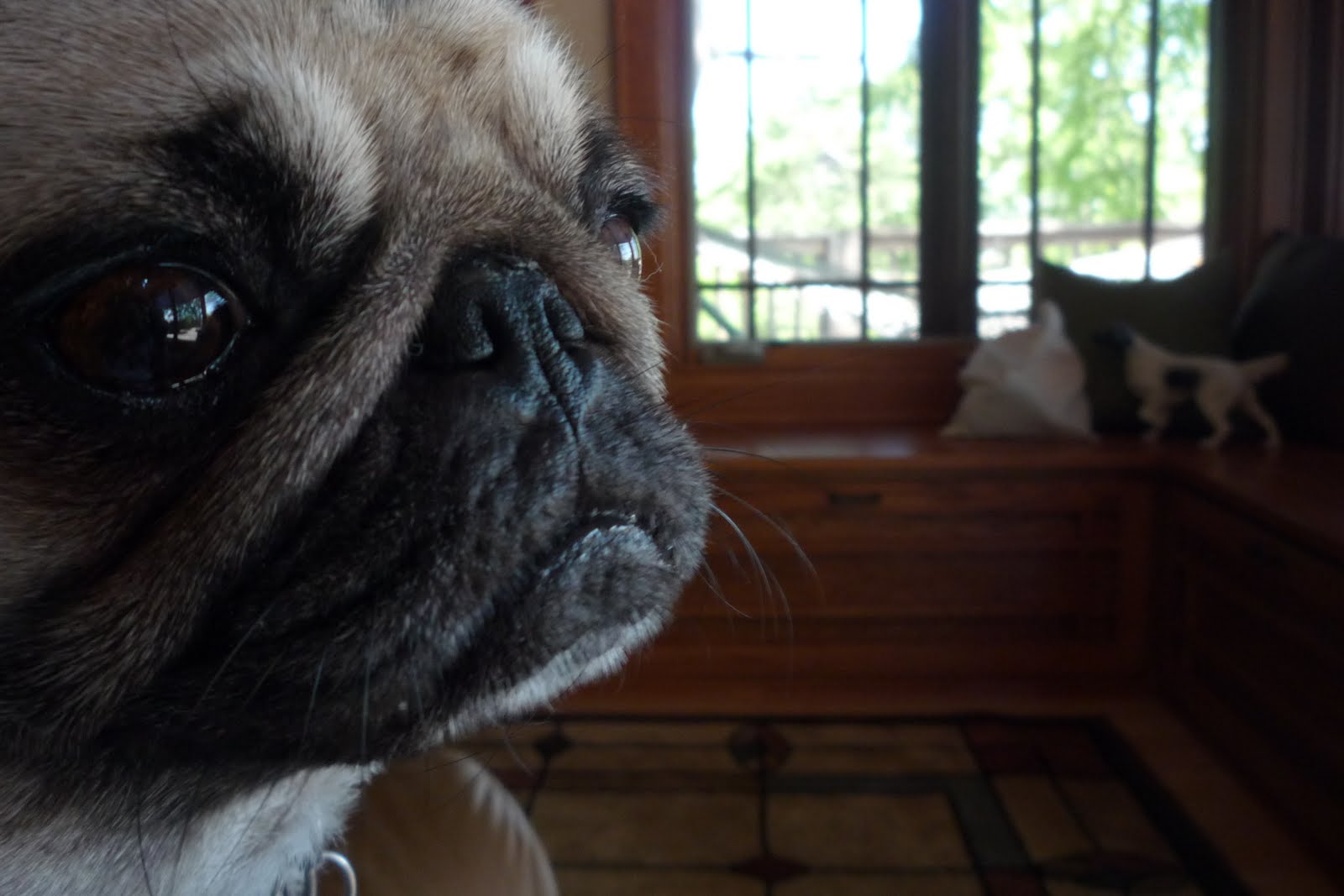
{Yes, that's a pug in the stroller.  He's old and can't walk well, ok?}


recovery from the morning walk


downtown burlington and the snake alley criterium


{snake alley is the crookedest street in the world.}

{and every year, there's a bike race on 
the Saturday of Memorial Day weekend:  
the Snake Alley Criterium.}


LinkWithin

Related Posts with Thumbnails