Showing posts with label midwest. Show all posts
Showing posts with label midwest. Show all posts
06 January 2015
we would be best friends because of hot dogs
I just bought Kristin Chenoweth's newest CD—Coming Home. She recorded it at a live concert in Broken Arrow, OK, her hometown, and listening to it, I wish I had been her next door neighbor growing up. She's so familiar and so at ease telling stories of her little town (that isn't all that little, truth be told). As she sings "Hard Times Come Again No More," you can believe that all of America is this idyllic small town, this blend of River City, Pleasantville, and Stars Hollow.
It isn't, of course, but as I sing along with Kristin to "Over the Rainbow," I like to pretend.
As often happens in our very connected world now, listening led to googling, looking for videos of Kristin in concert. I stumbled on this clip of her on Conan O'Brien where she talks about how much she loves chain restaurants, fast food, and specifically Sonic. She giggles as she praises the cheese taters and how you can get a cranberry slushie if you want to be healthy, and Conan is convinced that Kristin is secretly being paid by Sonic to promote them.
"No, I wish they would call me! I just love them and would love to do a commercial for them!" she says so genuinely that I just know, should we ever meet, we will bond over how under these classy exteriors, all we really want is a hot dog.


27 March 2013
5 things that prove I love Garrison Keillor
My love of Garrison Keillor has finally paid off, in the way only an English major raised on a steady intake of A Prairie Home Companion would consider a pay off:
As a promotion for his new CD, My Little Town, he's doing a "submit your favorite story about your little town" contest, and he picked this thing I wrote to publish on his site. {I'll tell you more about the thing in a minute.}

Note several things:
- I keep saying "he," as if Garrison is there coding the submission form. {You can see it for yourself and admire his handiwork. Such a renaissance man, he is.}
- Or as if he's staying up past his bedtime reading submissions from people around the country who are trying to make their town sound like Lake Wobegon.
- I mean, I realize that Garrison probably didn't actually read my poem, but I'm going to pretend. After years of listening to him him spin tales about a town that seemed so familiar and home-like to me, I'm going to pretend that he read about my little town—out loud, obviously, in that deep, nostalgia-creating voice of his—and thought to himself, 'Well, oh my, I'd like to go to this town this Kamiah girl is from. Maybe the next time I'm doing my show at Ravinia, I'll pop out to Glen Ellyn and visit her. We'd get along like gangbusters.' I just know he'd use the word gangbusters.
Yes, I'm going to pretend that my poem has now become one of Garrison Keillor's favorites.
In my mind, he's going to read it on that Writer's Almanac podcast of his someday {which I just wrote about yesterday. Garrison and I are already displaying best-friends-who-think-alike behavior}.
Please don't take my fantasy away from me, but give an NPR nerd her moment in the pale Minnesota sun that's shining down on Lake Wobegon right now.
A Little More about This Thing I Wrote
All you had to do was tell a story about your hometown, and I, in a rare moment of turning my back on Iowa, submitted a poem about Glen Ellyn that I wrote about two years ago. The carnival comes to town every year, and there is nothing like the smell of corndogs to put me in a poetry mood. {That's just the kind of statement Garrison would relate to.}You can read the poem here on my blog.
Or, if you'd like to see it in its Prairie Home Companion glory, you can see it here. {You, sadly, have to scroll down to the bottom. I need to call Garry and get him to put my poem on the top.}
So, there you have it: Garrison Keillor is, I'm sure, going to visit Glen Ellyn soon in order to meet me. If he comes during the carnival, I would most definitely buy him a funnel cake.
The following list may help really convince him that he should come.
5 Things that Prove I Love Garrison Keillor
- I own this t-shirt:

It is, for those of you who don't know {I scoff at you}, the shirt for the Professional Organization of English Majors, this group that Garrison made up and sometimes does sketches about. If it were real, you know I'd belong.
If you're an English major and you'd like a shirt, too, you should order one from Garrison. - I once met him—at Tanglewood. My family, we're kind of Garrison groupies, and we went out to western Massachusetts to see him do his show live one summer. Afterwards, we stood in line to meet him. When he heard my name, he said, "Kamiah. Kamiah. That sounds like a name that belongs in a limerick," which is not something I've ever had said to me before, nor is it the conversation I envisioned having with him, but that is all right.
- When I was in middle school, someone asked what I liked to listen to on the radio. I said, "A Prairie Home Companion," before I realized that I should've said, "Really awesome music that kids my age would know."
That experience mirrors the time in elementary school when we were asked our favorite band, and I said, "Peter, Paul, and Mary." - My parents go on the Prairie Home Companion cruises almost every summer. I realize this doesn't really prove why I love Garrison, but it clearly shows that it's in the blood.
- Someone once told me, "Your stories sound like something Garrison Keillor would tell. You're like a 30something girl version of him." I had just recently met the person, and I wanted to hug them. That is the 3rd best compliment I've ever received.

25 March 2013
we wait for spring
Upstairs from me, a sweet retired couple lives, and on March 1, the man, Hal, declared to me: "My winter ends today."
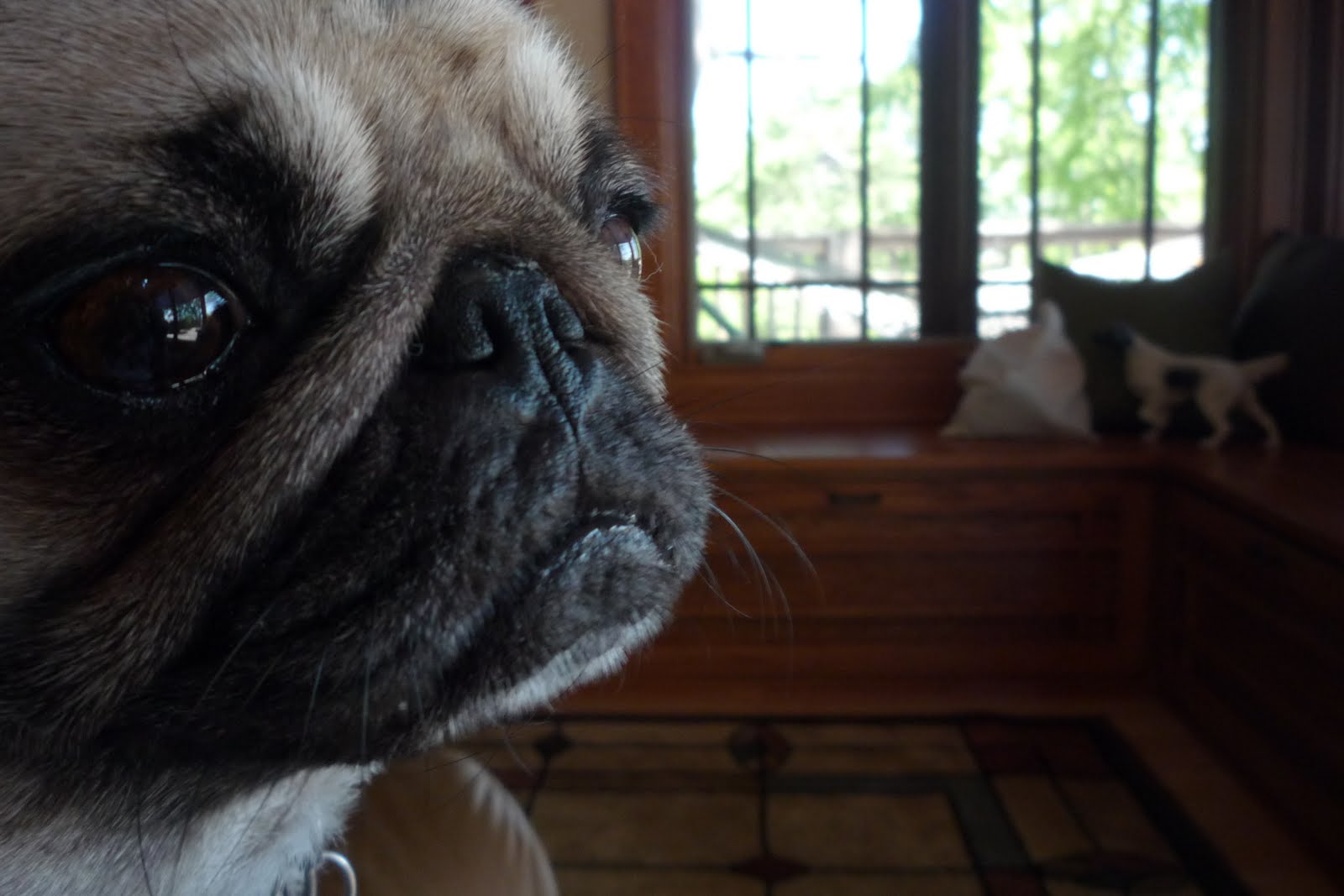
We were standing outside, having met on the sidewalk—me coming in from my morning walk with the little pug, and he heading out to his volunteer position as the crossing guard for the local elementary school.
The first time Hal told me that he was a crossing guard, I wanted to ask him if he got to wear the reflective belt—the one that loops over your shoulder and then wraps around your waist. I remember that from my crossing guard days at Grimes Elementary, and I also remember always getting it twisted, which rather limited its reflective abilities.
I didn't ask him that but assumed he was the lucky guy who gets to hold up the stop sign and wave at the cars as they drive by.
On March 1, Hal, on his way to be a crossing guard, had on a stocking cap, wool mittens, and a parka, and yet he declared to me: "My winter ends today."
He went on to explain, "See, Kamiah, I say every year that winter is over on March 1, even if it doesn't really happen until later in the month. But I like to believe that spring comes earlier, so I just say that winter is over."
He's told me that several times since then, and I can tell he tells a lot of people that. It gets him a laugh, and there is a practiced patter to how he says it. "So I just say that winter is over," he always concludes, and then he laughs, a quick ha-ha, at his own joke, as he zips up his parka.
I find these kinds of conversations comforting in their predictability. When it comes down to it, we all have something to say about the weather, and the very fact that on March 25, I woke up to flurries is indeed something to comment on.
The sky is falling, and we are all waiting for spring. Real spring, I mean, not the kind that comes just on the calendar or when an old man declares he's had enough of this Midwestern cold and gray.
I hope I see Hal tonight on my walk with little pug. I want to tell him that this morning, I saw a crocus pushing up through the earth, dotted with snow, but there all the same. Winter is ending. It really is.
09 March 2013
how do we ever get used to this?
Last weekend in Seattle, I couldn't stop looking at the water. It's what always happens when I get near the ocean, perhaps because of my landlocked Midwestern sensibilities. Even though I grew up on the Mississippi {or, more correctly, on the river bluff above it: I was not Huckleberry Finn, floating down the Muddy Mississippi and hoping for a better life around the bend} and therefore saw water every day, it simply is not the same as seeing so much blue stretch in front of you.
From my parents' house, I could see Illinois and more farmfields...with a ribbon of a brown river in the foreground. And though I knew that that river fed the farmfields and had inspired stories and songs, it was also just the thing I saw every morning when I ate breakfast.
But the ocean...
I drove to my bed & breakfast in the dark and so it wasn't until the next morning on my run that I saw the water. The town I was staying in, Port Gamble, was tiny and had about four main streets, one of which was called NE Walker St. Of course I interpreted that as a sign that I was in the right place.
I had to make about seven loops around the town, running up and down every street over and over, in order to get in my 31 minutes. {Several years ago, I decided that the minimum time I could run would be my age. This plan will, at some point, backfire, but for right now, it's working well.}
On my fourth lap past the espresso stand {this is the Seattle-area, after all}, the woman working waved at me and laughed.
I stopped by afterwards and said, in that way that lone travelers have, too much too quickly, as if I was concerned that this espresso woman would be the only person I'd talk to all day: "I live in Illinois, so I'm really excited to be able to run outside and not have to worry about slipping on the snow and ice. Look at me! I'm in shorts! I also can't stop looking at the water and smell that! It smells so fresh and clean here, like industry and inspiration are just waiting for you. But the water: Do you ever get used to seeing it?"
More than anything--more than the babbling and the talking of my shorts--that last line betrayed me as a foreigner. I suppose it would be like someone asking me, "But the Mississippi: Do you ever get used to seeing it?"
And of course I did. It was just there with barges going up and down it every day.
Sometimes it smelled like rotting fish.
The Mississippi mud can hide clams that slice your toe before you even know you've stepped on anything.
When we read Huck Finn our sophomore year of high school, no one once stopped a discussion to say, "But did you ever think that this river that seems so mythical and magical is literally two miles from this classroom with no windows?"
The Mississippi was just there, just like for that espresso woman in Port Gamble, the Hood Canal is just there. It's amazing what we can get used to.
But I'm still convinced that I would never get used to seeing so much water every day. I would never get used to breathing in deeply and feeling like I was taking in life itself, which I suppose I do every day anyway, but it's hard to remember that when you're in the suburbs of Chicago.
Whoever you are and wherever you live, I think we all need a Port Gamble-like place to escape to when our normal lives and normal view start to feel like drudge and sludge.
We need to see something else for a few days, and then, most importantly, come back to where we started and say: Here is good, too.
What is it about being away that makes you see the beauty of here? I don't know, but I'm willing to spend years figuring that out. It means, after all, more trips to more Port Gambles.


08 March 2013
straight on until yesterday
West to the sunset and straight on until yesterday.
Looking out from the 11th floor of this hotel—once the fanciest in St. Louis—it is not hard to think of yesterday.
Imagine here on the top floor ballroom, a society wedding in 1922. The smoke would be thick but that view west to the rest of Missouri and the rest of America would still be, besides the bride, the view of the day.
Or imagine the World's Fair in Forest Park, just across the street.
Meet me in St. Louis, Louis! Meet me at the Fair! How can you not think of Judy Garland singing about streetcars and heartstrings and merry little Christmases when you're in St. Louis?

When the Fair came to town, people who'd never been outside the middle of American could feel, not that they lived in the middle of nowhere, but that they lived in the middle of it all. The world had come to them, and they could stroll past it at their leisure.
No, it is not hard to think of yesterday up here, probably because the orange suffusing the view gives it all a nostalgic tint: That orange is the color equivalent of Judy Garland's voice.
Day is dying in the west; Heaven is touching earth with rest—but before it goes, there is one final blaze, as if to shout: remember me.
Then the shout fades to a whisper and we're all left staring at the memory of color and light.
31 August 2012
the drought
The cornfields of western Iowa are bone dry. Burnt is the word I want to use as I fly past them at 75mph on I-80, but they aren't burnt: they're thirsty.
This summer's drought has turned the field brown in early August, as if ready for the harvest.
Everywhere you go in the Midwest, the word "drought" is spit from everyone's lips; perhaps the spit will green up the fields.
Around kitchen tables and over thick-handled, coffee-stained mugs at the diner smelling of hashbrowns, grease, and routine—and even in the cities with their climate-controlled malls and chain restaurants—we are all talking about the drought.
"I can't remember when it rained last."
"We had that big storm around the Fourth, but that was more wind and thunder than a good rain."
"Have you ever known it to be so hot?"
Our throats are parched, our grass is prickly, and in our dreams, gray skies pour forth—waves of raine—as if it were autumn in England and we all lived in stone cottages with fat sheep in the back pasture.
We live in a burnt and thirsty land here in the Midwest this summer, but looking out over the cornfields, it is like it's late September already. The harvest is ready, though the overall scene is wrong: the trees are still a brilliant, life-filled green. {Their roots have stretched down through the years, down through the soil and the rocks to where they can almost always find water deep in the earth.}
If it were the harvest, the trees would be oranges and golds. They would be red against the blue autumn sky—a blue so shining, you would forget the washed-out blue skies of July when the heat sucked the color from the world.
They're green now; it is too early for the harvest. With the car window down, I can hear the cicadas singing, and they, too, are a harbinger of autumn.
The world is ready early this year, even if we are all still stuck in thirst for something more from summer.
30 August 2012
a wagner matinee: thinking of willa cather in nebraska
Shostakovich's 5th Symphony is on the radio—it's Saturday night and Garrison Keillor's A Prairie Home Companion is featuring the St. Olaf Orchestra, and that's what they're playing.
Shostakovich. Just saying his name makes you sound like you're in the cultural know, as if you've taken in hundreds of concerts in hundreds of gold-edged halls from London to St. Petersburg and you can remember each of them with clarity that rivals the tone coming from the St. Olaf first-chair flute.
Shostakovich. I say it aloud in the car. I'm out on the edge of the prairie—Garrison Keillor reference there, don't know if you caught it—and heading east on I-80. I'm in Iowa but thinking of Nebraska and Willa Cather.
It must be the classical music: she wrote a short story called "A Wagner Matinee," and it's hard now for me to look at the prairie and not think of its main character—an old woman who years before gave up the music and culture and dances and high teas of Boston for a Nebraska farm and the man she loved. She returns to Boston in the story—leathery, work-worn hands, eyes that have squinted in the sun for too long, having heard no music since she left the East but splayed notes coming from an out-of-tune piano. Her nephew takes her to a Wagner concert, and it's no longer the prairie she hears and sees but the life she could've had.
The music crescendoes in the story, and I've always wanted to be sitting next to that old woman—no, more than that. Willa Cather makes you feel that you are that old woman: living and thankful for a life on the prairie that has its own richness, songs, color, and crescendoes, but at the same time, yearning {secretly, quietly} for the clash of the city, the hush of the concerts, and the beguiling knowledge that you're in the center of it all.
The concert ends. The Flying Dutchman and Tannhauser are over, but Aunt Georgiana doesn't want to leave. Her nephew thinks, "I understood. For her, just outside the door of the concert hall, lay the black pond with the cattle-tracked bluffs; the tall, unpainted house, with weather-curled boards; naked as a tower, the crook-backed ash seeldings where the dish-cloths hung to dry; the gaunt, moulting turkeys picking up the refuse about the kitchen door."
Out on I-80, I understood, too: with Shostakovich strains filling the car and abandoned barns and windmills, cows in their pasture, and dried out fields of corn {oh, the drought} filling the landscape, I understood.
The 5th Symphony became just the right soundtrack for that moment on the road. The swelling stings matched the swell of the hills, and I thought about what gumption, what daring, it must've taken to move out to the prairie and try to make a life here, as Aunt Georgiana did in the story and as my family did generations before me.
The piece ended and the audience at A Prairie Home Companion clapped. Wild applause for the orchestra, and I pretended it was a round of applause for all those who made the prairie a home so that years later, I could drive across it on a freeway and marvel at the orderly beauty of agriculture and hard work.
06 February 2012
for sale {a poem} {feb fun #5}
The house which had been empty is now full,
a testament, perhaps, to the recovering housing market.
Months it sat, a shell of a home,
with that red front door that was meant to be welcoming,
but it clashed with the For Sale sign in the flowerless, brown, scraggly front yard.
A family has moved in now.
A cat has appeared in the front bay window, suspiciously eying passers-by.
There's a new blue sled propped up against the garage
bought in anticipation of a real Midwestern winter of snow that has yet to come this year.
Formal portraits have been hung in the formal living room or beige couches and chairs,
but downstairs in the family room,
the big screen TV is showing a football game
and as one, the family jumps up and
cheers.
19 September 2011
and a good time was had by all

With absolutely no context clues, I bet this picture makes very little sense.
Has she run out of things to say and will now start posting pictures of her looking at her watch? Is that supposed to be some sort of commentary on time passing and not knowing what to do with it?
No.
No, I have not run out of things to say. And I hope I would never make a bizarre commentary like that. It sounds sad and post-modern.
That's my time for the Air Force Half-marathon this past weekend.
I have some more thoughts about my time running, including:
- how I didn't make my goal time but how that's okay
- how my mind wandered while running
- how it's ironic that my last blog post was titled "slow down. you move too fast," but I spent a chunk of Saturday saying, "Swing those arms. Turn over those legs. Move a little bit faster."
- how Mary Tyler Moore, Jesus, and my grandpa helped me push on at one point
But first I need to collect my thoughts from the 13.1-mile route where I dropped them.
01 September 2011
night-time crazy
I woke up standing on my bed, pushing on the wall, throwing all my weight and muscle power into it.
Actually, "woke up" is not the correct phrase.
As with every other time something bizarre has happened in the middle of the night, I was well-aware what was going on the whole time.
I was awake.
My eyes were open.
It's just that my brain was convinced of some alternate reality.
I should probably back up a little bit here, huh?
--------
I am not a sleepwalker.
{I'm Kamiah Walker. Funny! Get it?!?! I have been making walking jokes for years with my last name, and I predict that it will never get old.}
I'm more of a late-night crazy thinker, which is the only time the phrase "late-night" will ever be applied to me.
See, every month or so, I sit straight up in bed, awake, convinced that something rather impossible is happening. In the past, I have thought:
You may, at this point, be concerned for my safety, and for that I say thank you. But rest assured, I've never harmed myself or caused harm to someone else. This brings me some level of comfort / quells the panic / pushes down the idea that I should have a sleep study done.
Actually, I'm more concerned for the logic that works on me in the middle of the night. At no point do I say to myself, 'Kamiah, this is not happening. There is no hand. Katie and Rachel aren't here. Don't worry about how cold it is in here and how people think you're a bad hostess. All this is in your head.'
No, instead, I talk myself out of it like this: 'Kamiah, you can go back inside now because the van isn't coming. You probably missed the pick-up because you were running late.'
THAT'S NOT LOGIC.
It's lying. It's some sort of alternate reality. It's night-time crazy, and I don't know why the crazy comes out then.
Take this wall incident, for example. I woke up convinced that my walls were bowing in, and I needed to push back on them to prevent them from exploding. Hence the whole standing on the bed in the middle of the night and straining against the wall thing.
I was pretty sure that the walls were bowing because of the change in air pressure from Hurricane Irene, and here's how I talked myself out of pushing on the walls for the whole night: 'Kamiah, hurricane Irene was downgraded to a tropical storm. Also, it's already passed and moved into Canada. Finally, I don't care how many push-ups you can do, you will never be able to keep a wall from exploding. Now go to sleep.'
Why doesn't my brain say to me, 'Kamiah, YOU LIVE IN THE MIDWEST. There are no hurricanes here. You're going night-time crazy again, so get it together and go back to bed.'
But my brain never says that. In the middle of the night, it never says the logical thing, and I wake up the next morning with vivid memories of night-time adventures. And then I very logically get out of bed and go about my day.
Actually, "woke up" is not the correct phrase.
As with every other time something bizarre has happened in the middle of the night, I was well-aware what was going on the whole time.
I was awake.
My eyes were open.
It's just that my brain was convinced of some alternate reality.
I should probably back up a little bit here, huh?
--------
I am not a sleepwalker.
{I'm Kamiah Walker. Funny! Get it?!?! I have been making walking jokes for years with my last name, and I predict that it will never get old.}
I'm more of a late-night crazy thinker, which is the only time the phrase "late-night" will ever be applied to me.
See, every month or so, I sit straight up in bed, awake, convinced that something rather impossible is happening. In the past, I have thought:
- that I needed to help load a van: I got dressed and rushed outside. I was late for the van loading, but I still took the time to brush my hair and pull it back in a ponytail. Regardless of the fact that it was the middle of the night, I needed to keep up appearances. When I got outside, I {not surprisingly} found no van. I thought, 'Well, they'—sidenote: who were they? I still don't know—'must be late. Now I have time to rest.' And then I sat down on the front step and waited; I will not tell you how long.
- that my friends Katie and Rachel were staying the night: And I had gone to bed without a) saying goodnight, b) showing them where they were going to sleep, or c) making the bed. I felt, as you may guess, intensely guilty about this.
'I'm a horrible hostess,' I chastised myself as I sprang from bed. It was winter, and in the winter, my apartment drops to 58 degrees at night {you can call me cheap; I call myself frugal and in love with burrowing under five blankets as if I were in Little House on the Prairie}. 'Who invites guests over and then tries to freeze them out after expecting them to make their own bed? Terrible, terrible hostess.'
I bumped the thermostat up to 68 degrees, and then rushed to the linen closet to gather up extra blankets. I paused at the door to the guest room. It'd be creepy, I decided, to actually put the blankets on them, as if I were pretending to be their mother and was checking on them in the middle of the night. Acting quickly, I pulled open the door and threw in the blankets.
'They'll wake up and find the blankets on the floor and take back all their nasty thoughts about how I'm a bad hostess,' I thought as I climbed back in bed, plotting out what I would make them for breakfast in the morning to further cement my hostess-with-the-mostess-ness. I don't know why I assumed that my very good friends were thinking very bad thoughts about me, but at this point, I think that should be the least of my concerns about my thought process. - that a hand was coming through my bedroom window: I told myself that if I hid under the covers, then the hand couldn't find me.
And really, that makes a lot of sense. A disembodied hand doesn't have eyes; even a very small child knows that. I smiled to myself as I flattened my back against the mattress. 'He'll never get me now!' I thought with glee.
Which inevitably leads to the question: How did I know it was a man's hand?
Oh, it was clear. The nails were ragged and the hand was large and looked like it could palm a football. So clearly a man's hand.
I slid out of bed, still under the covers, and then crawled—yes, on my hands and knees—to baby pug's room. {Yes, she has her own room. Okay, it's actually the same as the guest room featured in the "Katie and Rachel are sleeping over" adventure, but since she came at Christmas time, it's been her room.}
I figured that if I could get Miss Daisy to protect me from the hand, I'd be set.
Because everyone knows that disembodied men's hands are frightened of little pugs who wear pink collars.
"Shhh, Miss Daisy, it's okay," I whispered. Whispering was important because even if the hand couldn't see me, it could hear me. I just knew it. "Okay, you're going to come with Mia," I told her as I eased open her kennel and tucked her under one arm.
Crawling with a pug is difficult, by the way, even a sleepy one. Whispering to her about how you need protection doesn't make the job any easier.
You may, at this point, be concerned for my safety, and for that I say thank you. But rest assured, I've never harmed myself or caused harm to someone else. This brings me some level of comfort / quells the panic / pushes down the idea that I should have a sleep study done.
Actually, I'm more concerned for the logic that works on me in the middle of the night. At no point do I say to myself, 'Kamiah, this is not happening. There is no hand. Katie and Rachel aren't here. Don't worry about how cold it is in here and how people think you're a bad hostess. All this is in your head.'
No, instead, I talk myself out of it like this: 'Kamiah, you can go back inside now because the van isn't coming. You probably missed the pick-up because you were running late.'
THAT'S NOT LOGIC.
It's lying. It's some sort of alternate reality. It's night-time crazy, and I don't know why the crazy comes out then.
Take this wall incident, for example. I woke up convinced that my walls were bowing in, and I needed to push back on them to prevent them from exploding. Hence the whole standing on the bed in the middle of the night and straining against the wall thing.
I was pretty sure that the walls were bowing because of the change in air pressure from Hurricane Irene, and here's how I talked myself out of pushing on the walls for the whole night: 'Kamiah, hurricane Irene was downgraded to a tropical storm. Also, it's already passed and moved into Canada. Finally, I don't care how many push-ups you can do, you will never be able to keep a wall from exploding. Now go to sleep.'
Why doesn't my brain say to me, 'Kamiah, YOU LIVE IN THE MIDWEST. There are no hurricanes here. You're going night-time crazy again, so get it together and go back to bed.'
But my brain never says that. In the middle of the night, it never says the logical thing, and I wake up the next morning with vivid memories of night-time adventures. And then I very logically get out of bed and go about my day.
04 August 2011
king corn {and an activity-less week}
This week has been unusual for me, the girl of ongoing weekly commitments.
Everything has stopped.
Not like the world. The world is still spinning, thank goodness, but my activities have stopped spinning. I think, here at the beginning of August, I've arrived at "summer break."
No Bible study, no choir, no writing class.
Nothing to run off to after dashing home to feed and walk baby pug.
Really, all I've needed to accomplish every night this week is: feed myself. And not to brag, but I'm pretty good at taking care of that, especially when I allow myself to count popcorn as a meal.
So with these free evenings stretching in front of me, long like rows of corn lined up to the horizon, I decided to watch a documentary on corn.
Yes, corn. King Corn, to be specific.
You're probably wishing I still had activities so that I could tell funny stories about interacting with other people, aren't you?
But hey, I told a funny story about the eyebrow waxing lady! That was a people interaction story! So no more complaining!
I don't know why I just accused you of complaining, but this illustrates my point well: when I spend too much time alone, I quickly lose my ability to act like a normal person and make normal conversation.
This has happened for years. When I was little and on vacation, we sometimes spent entire afternoons reading. {You know you're jealous: I was camping in the backcountry of Utah and reading Anne of Green Gables all day. Best of so many worlds.}
When it was time to interact with real people again—and not just the people in my book—I would struggle to:
- not talk just about my book
- not get upset at my family for not being Marilla, Matthew, and Diana in Anne of Green Gables
- remember that just because I was reading a book set in Canada, that doesn't mean I get to speak with a Canadian accent.
The same thing happened this week when I was too often alone, too often in my own head.
I watched this documentary King Corn that was filmed mostly in Iowa; it's about how corn became such a major part of our diet and not in the "wow, we eat a lot of sweet corn in the summer" way. More in the high fructose corn syrup and corn-fed cattle way.
Fascinating, right? Yes, but not quite fascinating enough to talk about it as much as I have, but after an evening of talking to no one but Miss Daisy, I'm telling you, I forget how normal conversation goes and I start to sound like either a1a) a newscaster, b2b) someone who can't pick up on social cues, c3c) someone narrating a documentary, or d4d) a pinball conversationalist who can't stay focused long enough to put together a full sentence.
For example, an actual* conversation I had this week:
*Actual in that most of these words were said. It's not like I go around documenting everything people say to me, in the hopes that it'll become story fodder. No, it's more that I remember the gist of the conversation and hit the highlights. I say all this to reassure you that I'm not secretly taping you when we talk.
Co-worker: So, what'd you do last night?Me: Last night was awesome. So great! No activities this week! Isn't that wonderful?
Co-worker: Well, yeah, if you're used to—
Me: And, ooh! I made this amazing eggplant dinner! Recently, I'm obsessed with eggplants. I even bought a book on Amazon the other day called Alone in the Kitchen with an Eggplant. I'll let you know how it is, ok?
Co-worker: Um, all right. But did you have a good night?
Me: Right, you were asking about my night! No activities {already mentioned that!}, so I watched this documentary called King Corn. About corn. Well, the corn business. In Iowa, where I'm from.
Co-worker: Yes, you mention essentially every day your love for Iowa. So what made this documentary so good?
Me: Oh, man, what didn't make it good?
Co-worker: That's not really an answer.
Me: Yep, right, good point. It's about corn and the state of agribusiness, especially in Iowa. Really good discussion of farm subsidies and how the government pays farmers to grow corn using the Farm Bill and how subsidies came about. It also shows how the farming business has changed over the last 50 years to become not so much about the family farm as about the mega farm.
Co-worker: Huh.
Me: I promise it's much more interesting than i just made it sound.
Co-worker: I sure hope so.
But see, then I went on throughout the day to bring up King Corn several more times.
Me: What I really liked in that movie was how it's an outsider's perspective on Iowa.
Co-worker: You're talking about your corn movie again, aren't you?
Me: Haven't we always been talking about this? That's what it feels like.
Co-worker: You're telling me.
Me: {Blithely unaware that no one is as fascinated by corn as I am} Yeah, so at home we have grain elevators, and one of the first questions the guys in the movie ask the farmer they're interviewing is, "Why is it called an elevator? I mean, it's a whole building, not just an elevator." And see that's something I've just grown up with, calling those big things elevators. They store all the grain until it's ready to be transported, you know.
Co-worker: I don't know how to respond to that.
In conclusion, I think everyone in my office is happy that my activity-less period doesn't last very long.
And please, if you've seen King Corn, discuss it with me. I have some thoughts I'd like to share.
01 June 2011
to-do: manage to-do list
When my dad called to tell us that my grandpa had passed away, had not made it through the night up at the Mayo Clinic, I sat my mother down and said, "We need to make a to-do list."
I looked around my parents' house in Iowa for paper—since they've remodeled the living room, I don't always know where to find these necessities—and all I could find were small scratchpads. No, that would not do. We needed more room than a small scrap would allow.
I pulled paper out of the printer and went to work. Who to contact. What pictures to pull together for the memorial slideshow. Everything we needed to get from Sunnybrook, his assisted living home. What to do to get the house ready for guests.
Over the weekend, the list grew. It expanded to those little scraps of paper because I started to grab whatever was handy when a new list came to mind. Must not lose track of details.
Meals.
Grocery shopping.
Where everyone would sleep in my parents' house.
How many people would be coming to the dinner after the visitation and how many would come to the lunch after the funeral. {I've said the word funeral so much in the past few days that it's started to sound like a nonsense word, a made-up word, which I guess all words are at their core. They're all just scratches we use to try to make sense of what has happened.}
Timing of those meals: when should the lasagna go in and when should we pull the garlic bread out?
What bowl we should serve the salad in and a list of all the serving utensils we would need.
List upon list. Detail upon detail.
You may be thinking: were you making all these lists to avoid facing the reality of the situation? To avoid thinking about how your grandpa had just died? To avoid the emotion?
Maybe you aren't thinking that, but I did, a little bit. When your reaction to your grandpa's death is sadness and hurt mixed with a to-do list, you think that.
There's irony in this, but I don't care: I even made processing Grandpa's passing {at least the initial processing—there's always more processing to do} a to-do list item. I told myself to journal, which is the best way I know to process and feel and understand why I'm feeling what I am. Why I felt so compelled to make so many to-do lists.
And here is what I've come up with.
I did it because it helped bring control to an uncontrolled situation.
I did it because I didn't want to miss any details.
I did it because that's the way my mind works.
I did it because I wanted to be helpful.
I did it because I come from a very practical family.
And I did it because I loved my grandpa and I wanted to make sure that the family had everything they needed to be able to celebrate his life, including good meals and clean, comfortable beds to rest in.
Some of these to-do lists are now in my wallet, the ones written on scraps of paper when the idea and moment struck. I'll carry them for awhile, perhaps longer than I need to, but do you know what I found when I went through the boxes of family records and pictures over the weekend?
My great-great-grandfather, John Walker, had a wallet stuffed full of scraps of paper. I went through it, unfolding the papers carefully because I was scared that one touch would rip apart my family history, and I found receipts for farm equipment and services rendered. The typical stuff of a wallet—at least the wallet of a man farming in Iowa in the late 1800s.
But I also found lists. What the oats sold for. How many hogs he had at a certain point. When to plant and when to reap {there is a time for everything}. Who bought the corn. What tools needed mending.
I told you I come from a very practical family: lists are in our blood.


16 May 2011
bisous
In the Chicago Tribune last Sunday, there was an article on the social kiss and how it's gaining popularity here in America, perhaps because we want to be more European or fancy or because we've finally gotten over our American isolationism.
I would argue that the social kiss is gaining popularity on the coasts and that it's slowly making its way to the Midwest, just as many things, including fashion, eventually reach us here in the middle of the country—years after the trend started.
I have anecdotal evidence for my coast-to-the-Midwest kiss theory: my company has an office in New Jersey, and I come out here every few months or so to sit in a conference room and bond with my co-workers, people I usually talk to via conference calls and Outlook.
It never fails that I get kissed when I come to New Jersey, which could, perhaps, be a good slogan for the state. Who wouldn't want to come to New Jersey with a slogan like that? In my view, it'd make more sense than the Garden State, and it would go far in dispelling that view that New Jersey is simply the armpit of New York City.
But back to the kiss: my New Jersey co-workers kiss me when I come through the door, something my Illinois co-workers never do and I don't know how long we'd have to work together before they did that.
Granted, I don't know if these NJ people kiss each other every day—how very French that would be—but clearly these Coast people are more okay with the social kiss than this girl from Iowa.
Unless I'm pretending to be the girl from France—then the social kiss, the double cheek kiss thing, makes me feel at home.
I wrote this thing when I lived in France and taught English at a French high school. In it, I was trying to figure out social conventions but also thinking about how important touch is—how important it is to be touched on a daily basis.
What's that statistic? That to be healthy, you should be touched 12 times a day, or maybe it's 37, although that seems like a lot.
Statistics aside, it's important to be connected to others and when the social kiss makes it way to the Midwest, I will be ready, thanks to France.
-----
Kiss kiss. So light, so quick, so not enough for me.
Here in France, as in so many other European countries, the double cheek kiss is de rigeur.
When you first meet someone, kiss kiss. When you run into a friend in the street, kiss kiss. When you go to someone’s house for a 3 hour dinner, kiss kiss.
Goodbye is a kiss. Hello is a kiss. Thank you is a kiss. With all this kissing practice, no wonder the French have a whole kind of kissing named after them.
Bisous, the double cheek kiss thing, are an expected routine here, but for me, they still feel, paradoxically, both too personal and not personal enough.
They burst my personal space, physically and mentally, because I don’t often kiss people back home, and here, I’m kissing co-workers, people I meet at church, little kids, everybody.
The French kiss like we shake hands, which is what makes bisous not personal enough: it’s just something that has to be done. Most people don’t even really kiss but do that high society princess air kiss. “Oh dahling, how perfectly perfect to see you! Mwah, mwah.”
Bisous are more mashing together cheeks than actually kissing, and for all the noise they make and for how close they make me get to people I barely know, I wish I could feel the care in them.
As I’ve found my life in France, I’ve come to accept and even appreciate bisous, in the same way that I appreciate for his very Frenchness the waiter who won’t bring the bill until I force him to notice my impatience by tripping him.
C’est la vie en France, and France and all its particular Frenchness are now part of me.
I’ve come to realize that there are different levels of bisous: the cheek mashing for slight acquaintances, for example.
The more you know each other, though, the more you’re actually kissing cheeks and not symbolically the air around the ear.
There are such barely noticeable shades of intimacy in if they touch your shoulder while leaning in or if they smile. It can be like trying to explain the difference between brick red and fire engine red – only noticeable if you really want to notice – and I do want to notice.
Noticing will give me reasons for why France won’t let go of me, even when I’ve seen how life here isn’t any easier just because of its otherness.
Bisous were so foreign to me when I first came to live in France, but I found that simply bisous-ing made me feel more French and less foreign here. I often feel just out of place and just misunderstood, and I quickly learned in loneliness what sticking out as Not One of Them does to your self-esteem and self-confidence. It took me longer to learn what defining yourself without a common culture and with pre-conceived notions to fight does for who you are and who you want to be.
Who I am right now is a displaced American aware of the distance of that displacement. That’s neither good nor bad but just a numbered reality: I am thousands of miles from home.
It was my choice to leave that predictable Midwestern home; I know that as well as I know that life and lives didn’t refuse to move on when I moved out of the country.
As I learned to accept France and its Frenchness, I learned to let go of selfish desires – that my absence would hurt and not heal, that I’d wrestle foreign challenges and win easily by living an enviable life, that I’d be so loved that everyone would want to keep me at arm’s length.
“At arm’s length” usually has a negative connotation, like you’re trying to keep someone out. Now I think of it as trying to hold someone in and keeping them within a hug’s reach, and I think like that because I’m so rarely held like that.
Oh, I miss other parts of American culture, like how stores are open on Sundays and how you can charge anything, but it’s missing the hugs of my friends and family that emotionally unravels me at times.
Overdramatic? Maybe. Over-analytical? Of course, but adapting to another me in another culture uproots me enough that I spin around grasping for any normalcy or comparison and end up confused about what’s normal.
It scares me, for example, that when I was back in Iowa over Christmas, I expected people to bisous. Waiting in a café, I watched friends meet and when they hugged or simply smiled, I felt a twinge of missing the bisous which have become routine for me.
But back here, I miss hugs because squeezed so tight is how I feel loved, not in the mostly fleeting formalities of kiss kiss. My arms at times ache to hold something other than that day’s little worries and joys.
When I tried to explain to a French friend what my arms felt – weakly alone – she smiled as if she wanted to understand. Then she bisous-ed me and sent me on my way, bucked up for a French day in the French way. Kiss kiss.
14 January 2011
The Music Man is not real life
"It is a well-known principle that if you keep the flint in one drawer and the steel in another, you'll never strike much of a fire."
I said this with authority.
I said this with the attitude of a woman who'd been married for 38 years to her high school sweetheart, giving her the freedom to lecture whoever she wants on the way to get married and conduct relationships and not end up an old maid.
I said it to my co-worker Christy, who was about to go on a date and was having those doubts. The stealthy ones that sneak up like lions, low to the ground and hidden by the grass—you don't know they're even there until the last possible moment.
Then, just as you're ready to go meet this person, pounce. The doubts come out of the grass, and you suddenly feel you'll be mauled if you go to the restaurant. The idea of spending an hour or so making small talk and trying to smile at this person you barely know makes you go wild. And feel hunted, or perhaps like a hunter.
That is the feeling Christy had, and I was trying to reassure her. I wanted to get her through the door and to the table. She needed to see that just because you're meeting someone for drinks, that doesn't mean you have to fall madly in love with them, nor does it mean that you even have to like them.
However, the tactic I took was not as helpful as I intended.
29 December 2010
who can turn the world on with her smile?
That is not a rhetorical question, that title up there.
It's a quiz: what TV show's theme song has that line in it?
Another way to phrase that is: what TV show from the 70s am I obsessed with?
I'll give you a minute to think. A clue: It's set in Minneapolis.
Another clue: I used to wake up every morning to the theme song because it put me in that good of a mood. {Note: This clue may not be worth much, unless you've actually woken up with me, and I very highly doubt that you have.}
{Yes, I'm making you scroll down.}
{Doesn't this remind you of those email forwards that inevitably begin with "think of a number between 1 and 100"? Then you go through this whole series of questions,
scrolling
scrolling
scrolling
until you got to the end, and it magically lists the number you first thought of.
And the person you're going to marry.
And the kind of house you'll live in.
And how many kids you'll have.
Wait, that's the game MASH.}
ANSWER
The Mary Tyler Moore Show
I hope you got this right. It's very important to me that you know about Mary.
Today is her birthday—is it just me, or do I seem to be writing a lot about other people's birthdays recently, people I adore but have never met? {Not that I could've met Jane Austen or Louisa May Alcott. I'm still holding out hope for Mary.}
Why I Love The Mary Tyler Moore Show
A Bullet Point List by Kamiah A. Walker
- I saw the show for the first time when I was 12 or 13. Then, being 30 seemed the height of being grown-up, an idea later corroborated by that 13 Going on 30 movie, where the little teenager wishes to magically become 30 and it happens. Thank goodness I didn't wish to become a 30-year-old in the 70s. I might've been concerned by the hemlines and the lack of computers. {A semi-related question: Do you ever think about what people did in offices before email?}
- I like that Mary was single and that the point of the show wasn't to marry her off. She went on lots of dates. She even got proposed to once or twice. But the show doesn't end with her wedding. As a 29-year-old single girl, this is especially important. Singleness doesn't define me, but it is fun to watch a show about another single girl.
- Mary was a cheerleader and in student council when she was in high school. So was I. Up for grabs is whether I did those things because I wanted to be like Mary. Actually, I'll grab that one: I had wanted to be a cheerleader since I was 3; Mary had nothing to do with that one.
- I got the first season of Mary Tyler Moore on DVD just before I left for France to teach for a year. Many, many a night—when my brain was empty from speaking French and trying to fit in all day—I would slip under the covers, prop up my laptop, and let Mary distract me and show me life in my beloved Midwest.
- The friendship between Mary and Rhoda is so easy. Popping into each other's apartment. Eating dinner together on random weeknights. Playing tennis on Saturday afternoons. When I first moved to Wheaton five years ago, not knowing too many people, being able to watch their friendship was a comfort—not going to gloss over that fact. Did I live vicariously through TV for a little while? Yes. Mary helped.
And now I have friends to eat dinner with on random nights, cobbling together a quiche or a salad, and stitching together conversation with threads that have been running through our lives {boys, church, work, frustrations, joys}. - When I have a bad day—a really bad day when I have the mean reds and start to take everything that happens as a personal affront—on days like that, I watch a very specific Mary Tyler Moore episode to help me deal: "Put on a Happy Face." It's about this time that Mary has a series of terrible, awful, no-good, very bad days, and she's tired of always having to be chipper little Mary. That one episode gives me the freedom to accept that I don't always have to be chipper little Mia. Plus, it doesn't hurt to laugh. And I always laugh, no matter how many times I watch it.
Please tell me I'm not alone in this obsession, not that you have to share my Mary fascination. I just hope I'm not the only one who uses a TV show—a leftover from an era I don't belong to—to feel better sometimes.
29 May 2010
you can go home again
and when you get home, you can take pictures of it.
and then later,
when you aren't so tired,
you can write more about home.
what is it about being home
that makes my entire body
collapse in on itself
and beg for more time
sleeping in
the bedroom that still has
the pink carpet
i picked when i was 6?
the bedroom that still has
the pink carpet
i picked when i was 6?

the morning walk along the Mississippi.
{Yes, that's a pug in the stroller. He's old and can't walk well, ok?}


recovery from the morning walk

downtown burlington and the snake alley criterium


{snake alley is the crookedest street in the world.}

{and every year, there's a bike race on
the Saturday of Memorial Day weekend:
the Saturday of Memorial Day weekend:
the Snake Alley Criterium.}


Subscribe to:
Posts (Atom)
LinkWithin
